How Do You Know if You Have Cervical or Ovarian Cancer
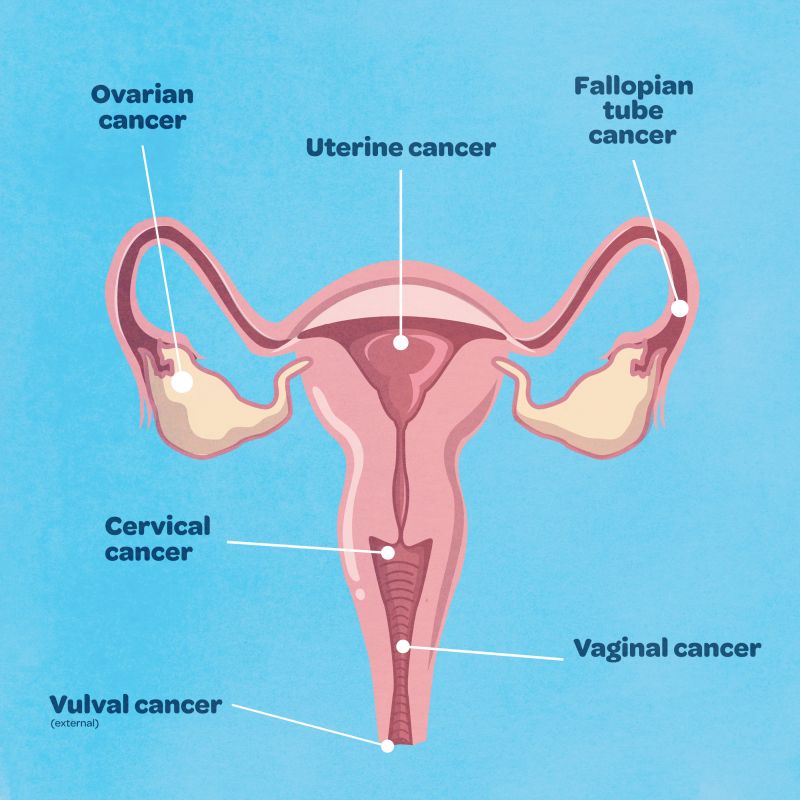
Gynaecological cancer is a term used for all the types of cancer that tin can occur in or on a woman's reproductive organs and genitals. This includes cancers of the vulva, vagina, cervix, uterus, fallopian tubes and ovaries. About 9.vii% of all cancers diagnosed in Australian women are gynaecological cancers.
While there are screening tests for some gynaecological cancers, for others in that location is no proven screening method. This means that it'due south important for women to be aware of the possible signs and symptoms of gynaecological cancers and get to know their bodies well, and then they tin can tell if anything changes. Below, we've listed the unlike types of gynaecological cancers, their symptoms, possible methods of prevention and applicable screening programs.
I think I have symptoms of a gynaecological cancer – what should I do?
Yous know your body best. If you've noticed a change in your body (and it's ongoing – there's a departure between existence bloated later on one big repast and being consistently swollen in a way that is unusual for y'all) so head to the doctor. The same thing goes if a partner notices a alter in your torso – sometimes they will see or feel things that y'all won't have noticed, so if they tell you about a change, accept that information straight to your md.
Most of the fourth dimension your symptoms volition take a different, less serious crusade, and once y'all know what's going on yous tin get advisable treatment and terminate worrying that it's the big C. It's e'er best to become cancer diagnosed and to start a handling programme every bit early on as possible, so if you do have cancer, you'll be glad you caught it as soon as possible.
It's always okay to get a second opinion if you lot're still concerned about symptoms that haven't gone abroad after you lot've seen a doctor. Doctors are used to this, in fact, sometimes they'll even recommend it. No i knows your body like you do, then if something has changed and it's worrying you, book an engagement.
What happens if I accept a family history of cancer?
Having a family history of cancers like ovarian cancer does not mean yous will definitely get the same or a similar type of cancer yourself. Only family history can impact your chance level of certain types of cancer, then it'southward of import to let your md know who had cancer, what blazon of cancer they had, and how old they were.
Your doctor will exist able to let you lot know if you lot should accept whatever tests to monitor your health and volition talk to y'all near ways you can lower your gamble of cancer developing.
What are the unlike gynaecological cancers?
Cervical cancer
Cervical cancer is a cancer that forms in the neck. The cervix connects the vagina and the uterus. Virtually all cervical cancers are caused past the common, sexually transmitted human papillomavirus, or HPV. Because of this, the National Cervical Screening Programme tests women for HPV infection every v years.
What are the symptoms of cervical cancer?
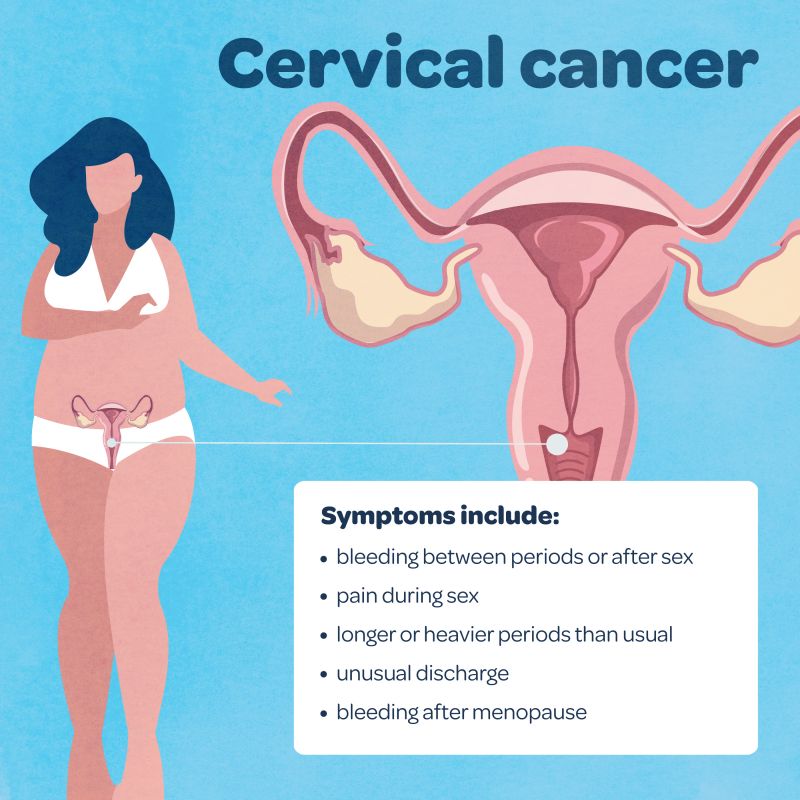
Symptoms of cervical cancer tin can include:
- bleeding between periods or after having sexual activity
- hurting during sexual activity
- longer or heavier periods than usual
- unusual discharge from the vagina
- vaginal bleeding subsequently menopause
Symptoms of avant-garde cervical cancer can include:
- excessive tiredness
- leg pain or swelling of the legs
- lower back pain
Tin can cervical cancer be prevented?
The adept news is that cervical cancer is one of the nearly preventable types of cancer. Because nigh all cervical cancers are acquired by HPV infection, preventing HPV can as well prevent cervical cancer. You can get vaccinated against HPV, reducing your risk of both infection and cancer.
The HPV vaccine is most effective when given in early adolescence, well before a person becomes exposed to HPV. HPV vaccinations are provided to boys and girls in year 7 through the School Immunisation Program or their dr.. If you're already sexually active and haven't had the vaccine, it's still worth talking to your dr. about whether you should exist immunised. People 19 years old or under can get the HPV vaccine for free from their doc.
To be fully vaccinated against HPV yous require two doses of the vaccine, given at least 6 months apart. And then, whether you've had the vaccine at school or through your doctor, it's really important you recollect to become the second dose.
Y'all can read more about HPV and the HPV vaccine on the Australian Government Immunisation website.
Cervical cancer can also be prevented by getting regular Cervical Screening Tests to detect HPV infection before it can cause cancer. In Australia, these are offered for complimentary every bit role of the National Cervical Screening Program.
Smoking also raises your risk of cervical cancer, so if you're a smoker (even a social smoker) it's time to quit! You can find resources to aid yous quit smoking at QUIT HQ.
What is the National Cervical Screening Program?
The National Cervical Screening Program, or NCSP for short, is a programme prepare to routinely test Australian women for HPV infection which might pb to cervical cancer. Considering of this program, Commonwealth of australia is on the way to being the first country in the world to eliminate cervical cancer.
The NCSP provides women who are 25 years or older a free Cervical Screening Test every five years. In 2017, the Cervical Screening Test replaced the ii-yearly Pap Smear Examination. You can notice more than information near what the Cervical Screening Test is, why y'all should get one, and why it replaced the Pap Smear in these manufactures:
Everything that happens during your Cervical Screening Test appointment
Cervical cancer screening – what is changing and how volition information technology bear upon y'all?
Uterine cancer
Uterine cancer, or cancer of the uterus or womb, is cancer that occurs in the uterus. Your uterus is the organ located within your pelvis – it'southward where a baby would abound if you were significant. There are two master types of uterine cancer: endometrial cancer, which occurs in the lining of the uterus, and uterine sarcomas.
Symptoms of uterine cancer
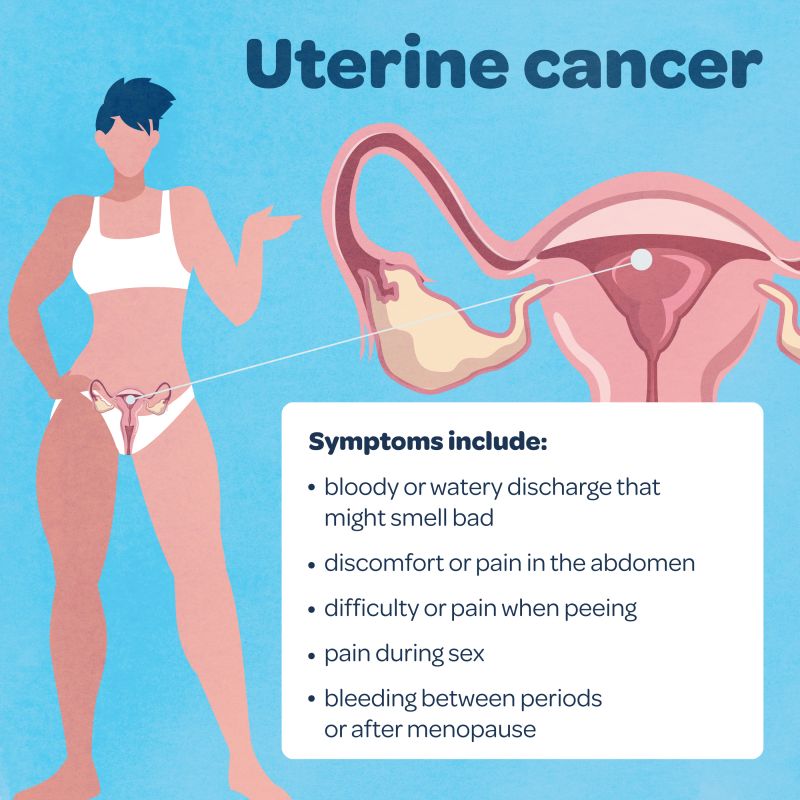
Symptoms of uterine cancer tin can include:
- encarmine or watery belch, which might have a bad smell
- haemorrhage between periods or later menopause
- discomfort or pain in the abdomen
- difficulty urinating or pain when using the toilet
- hurting during sex
Screening for uterine cancer
There is no proven screening examination for uterine cancer, so it's important that you let your dr. know if you observe any changes, particularly a change in discharge.
How can I prevent uterine cancer?
A number of lifestyle factors tin change your level of take chances of having uterine cancer, including maintaining a salubrious weight and getting regular physical activity. You tin read more than about the hazard factors of developing uterine cancers at Cancer Australia.
Ovarian cancer
Ovarian cancer is cancer that occurs in ane or both ovaries. Your ovaries are the two pocket-sized organs that sit down either side of your uterus. They release ovum (eggs) and hormones. You lot can learn more well-nigh your ovaries in our podcast episode: My Amazing Body – The Ovaries.
Symptoms of ovarian cancer
Ovarian cancer doesn't always crusade symptoms, or if it does, they might seem vague or similar to other weather condition. If you lot experience the below symptoms and they are unusual for your trunk or don't go abroad, let your doctor know.
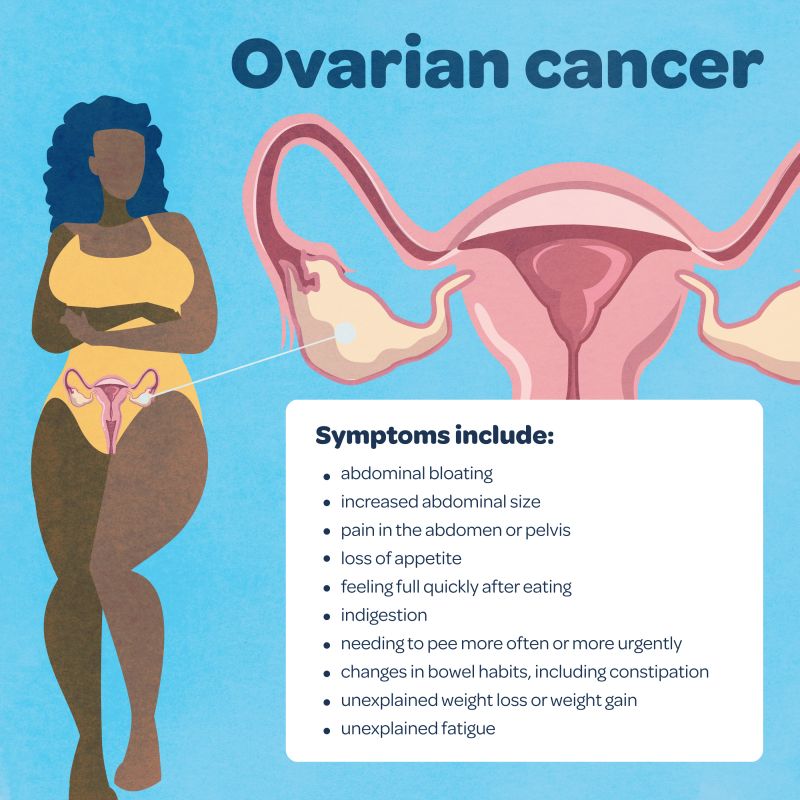
Symptoms of ovarian cancer can include:
- abdominal bloating
- increased abdominal size
- pain in the abdomen or pelvis
- loss of appetite (non feeling like you desire to eat)
- feeling full quickly later eating
- indigestion
- urinary changes – needing to get more often or more urgently
- changes in bowel habits, including constipation
- unexplained weight loss or weight gain
- unexplained fatigue.
How can I forbid ovarian cancer?
Some run a risk factors of ovarian cancer are unavoidable. Having a family unit history of ovarian cancer, breast cancer or colon cancer, or a mutation in the BRCA1 or BRCA2 genes, is not something you can alter. You lot should talk to your doctor about monitoring your health and ways to reduce your adventure.
Smoking and obesity are both linked to a college risk of developing ovarian cancer. Caput to QUIT HQ for support to quit smoking. Healthier. Happier. provides tools and information to help you maintain a healthy weight.
Untreated sexually transmitted infections such equally chlamydia can increase the risk of ovarian cancer, so it's important that you take a sexual health check to check for any infections regularly, or with each new sexual partner.
Having children, using the oral contraceptive pill and having tubal litigation (tubes tied) all reduce the risk of ovarian cancer.
Screening for ovarian cancer
There is no screening examination for ovarian cancer, so it'southward important to allow your doctor know if you lot notice any changes.
Fallopian tube cancer
Fallopian tube cancer occurs in one or both of the fallopian tubes. These are the tube-shaped structures that run between your uterus and ovaries.
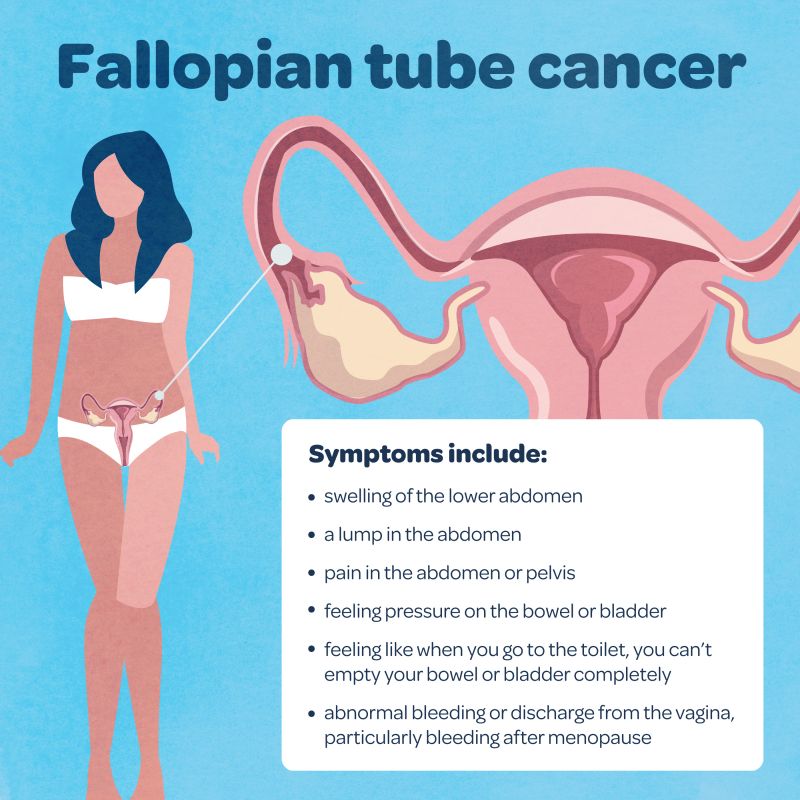
Symptoms of fallopian tube cancer
Often, fallopian tube cancer won't cause any symptoms. When it does cause symptoms, these can include:
- swelling of the lower belly without increased weight gain elsewhere on the trunk, which doesn't get away with a modify in diet or concrete activity
- a lump in the belly
- pain in the bottom of the abdomen or pelvis that doesn't become away
- feeling pressure on the bowel or bladder
- feeling like when you lot go to the toilet, you can't empty your bowel or bladder completely
- abnormal bleeding or discharge from the vagina, particularly bleeding after menopause
How can I forbid fallopian tube cancer?
Ongoing infection or inflammation of the fallopian tubes is associated with a higher take a chance of fallopian tube cancer. This might be caused past untreated sexually transmitted infections, so information technology'south important that yous have a sexual wellness cheque to check for whatever infections regularly, or with each new sexual partner.
Screening for fallopian tube cancer
There is no proven screening test for fallopian tube cancer, and then it's important that you lot let your doctor know if you notice any changes.
Vulval cancer
Vulval cancer (also known as vulvar cancer or cancer of the vulva) is cancer that occurs on the genitals on the outside of a woman'due south torso. This includes the labia minora and labia majora (you might know these as your inner or outer lips), the clitoris, the pubic mound and the perineum, which is the skin between your vagina and anus. Vulval cancer is more common in women who have gone through menopause, but it can bear on women at any age.
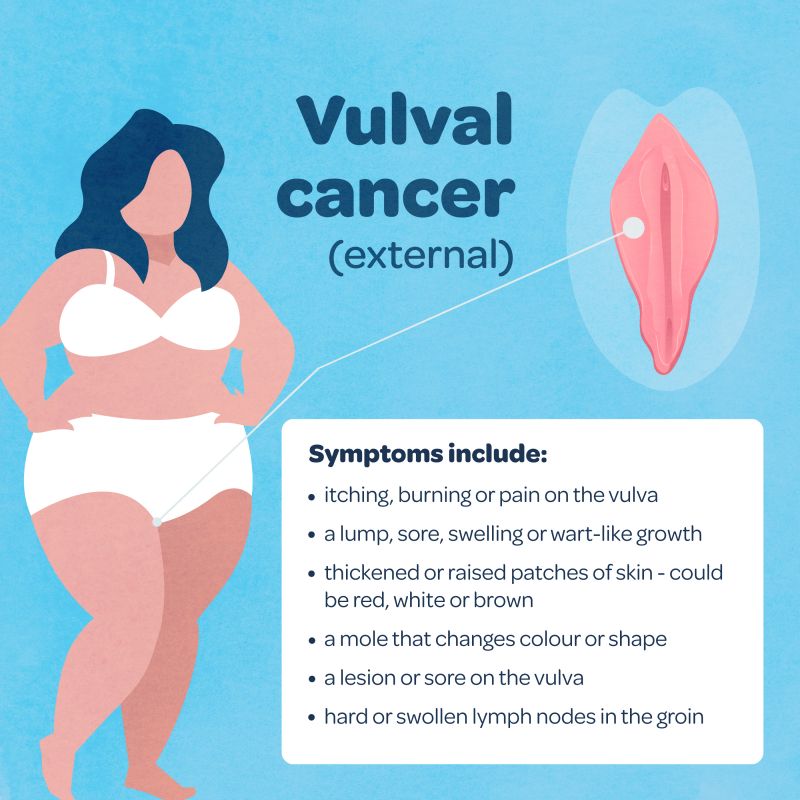
What are the symptoms of vulval cancer?
Symptoms of vulval cancer tin include:
- itching, burning or pain at a signal in the vulva
- a lump, sore, swelling or wart-like growth
- thickened or raised patches of peel on the vulva, which could be cherry, white or brown
- a mole that changes colour or shape
- a lesion or sore on the vulva that releases claret, pus or discharge
- hard or bloated lymph nodes in the groin
What should I do if I've noticed a modify in my vulva?
If you've noticed any of the above symptoms or another alter to your external genitals, y'all need to show a medico. It's really catchy to properly self-examine your vulva – information technology can be hard to go a skilful look downwardly at that place! Tell your GP or gynaecologist about whatever changes you've noticed and they can take a look and exercise whatever tests that are necessary.
Screening for vulval cancer
In that location is no proven screening test for vulval cancer, so it's important that you get to know the normal look and feel of this function of your trunk and let your doctor know if you notice whatever changes.
How can I forestall vulval cancer?
HPV tin sometimes crusade vulval cancer, so equally with cervical cancer, it's recommended you lot go immunised confronting HPV.
Smoking likewise raises the risk of vulval cancer, and then if y'all're a smoker (even a social smoker) it's time to quit! You can discover resources to help you quit smoking at QUIT HQ.
Vaginal cancer
Vaginal cancer is cancer that forms in the tissue of the vagina. Your vagina is the internal passage that starts at the opening in your vulva and runs through to your cervix. Vaginal cancer is ane of the rarest forms of gynaecological cancer; only virtually 70 women are diagnosed with vaginal cancer in Australia each twelvemonth. Information technology tends to more often than not affect older women, with 70 being the average age of diagnosis, but it tin touch on women of any age.
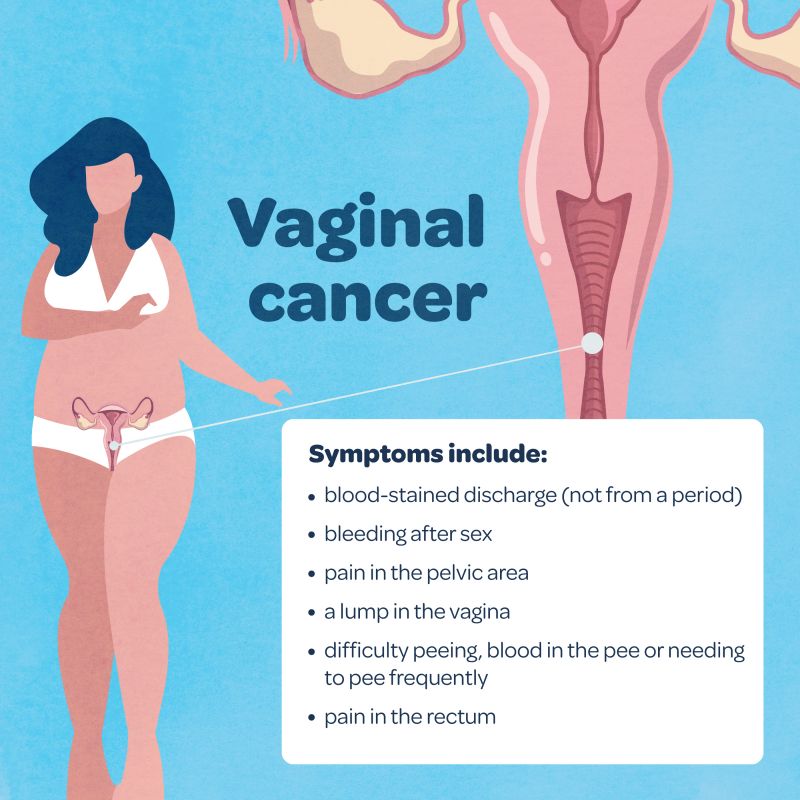
Symptoms of vaginal cancer
Vaginal cancer often doesn't cause whatsoever symptoms, especially in the early stages. When they practise occur, symptoms of vaginal cancer can include:
- vaginal belch that is claret-stained or has claret in it, that isn't from a menstruation
- haemorrhage subsequently having sexual practice
- pain in the pelvic surface area
- a lump in the vagina
- difficulty urinating, blood in urine or needing to employ the toilet often
- pain in the rectum
Screening for vaginal cancer
There is no proven screening test for vaginal cancer, and then it'due south important that you lot get to know the normal expect and experience of this part of your torso and let your doctor know if y'all observe any changes.
How can I prevent vaginal cancer?
HPV can sometimes cause vaginal cancer, and so as with cervical cancer, it's recommended you become immunised confronting HPV.
Smoking besides raises the risk of vaginal cancer – in fact, smoking doubles your risk of developing this disease. If yous're a smoker (even a social smoker) it's fourth dimension to quit! You can find resources to help you lot quit smoking at QUIT HQ.
More than information
More information about gynaecological cancers can be found at the links beneath:
Cancer Australia: Gynaecological cancers
Cancer Council: Gynaecological cancers
The subtle symptoms of ovarian cancer – what a survivor wants women to know
Ovarian Cancer Commonwealth of australia
Source: https://www.health.qld.gov.au/news-events/news/signs-symptoms-treatment-prevention-screening-test-gynaecological-cancer-women-cervical-vulval-vaginal-uterine-fallopian-tube-ovarian

Postar um comentário for "How Do You Know if You Have Cervical or Ovarian Cancer"